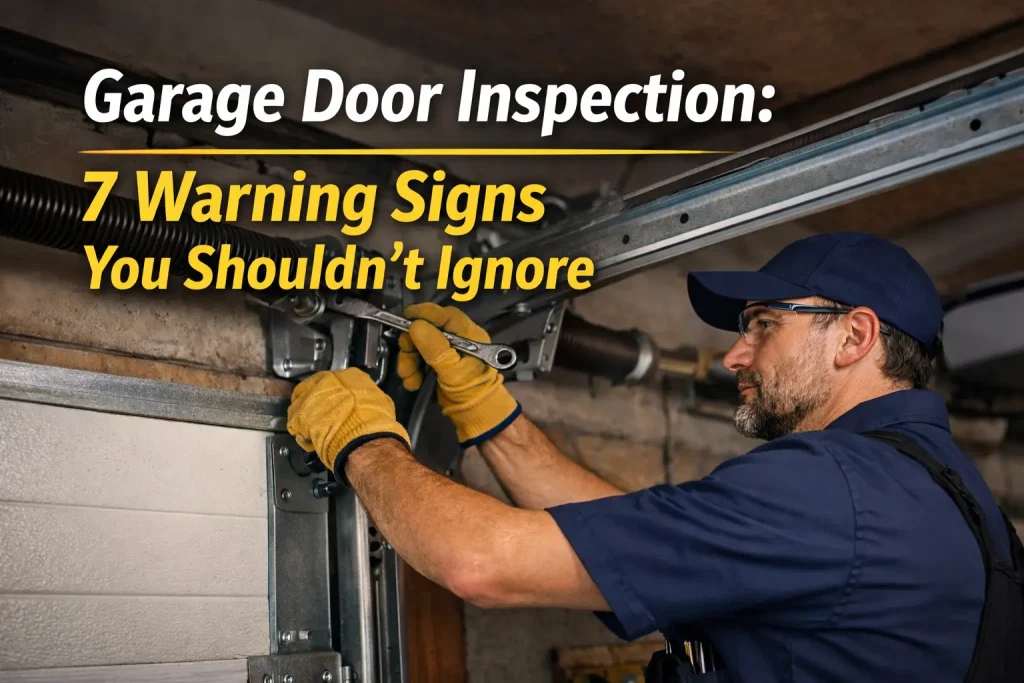
A professional garage door inspection is one of the most important services homeowners often overlook. While most people wait until something breaks before calling for help, routine inspections can detect hidden problems early and prevent expensive repairs or dangerous failures.
Garage doors are heavy mechanical systems that operate daily. Over time, wear and tear affect springs, cables, rollers, tracks, and openers. A thorough inspection ensures every component is functioning safely and efficiently.
Why Garage Door Inspection Is Essential
Your garage door is the largest moving part of your home. A small mechanical issue can quickly escalate into:
- Broken springs
- Door misalignment
- Motor strain
- Sudden failure
- Safety hazards
Routine inspections reduce risk and extend the lifespan of your system.
1️⃣ Spring Condition Check
Springs handle most of the door’s weight. During a garage door inspection, technicians evaluate:
- Rust or corrosion
- Tension balance
- Wear patterns
- Cracks or stretching
Weak springs can snap unexpectedly, which may cause serious injury or property damage.
2️⃣ Cable and Pulley Inspection
Cables work alongside springs to lift and lower the door. Frayed or worn cables are common warning signs of future failure.
An inspection ensures cables are properly aligned and under correct tension.
3️⃣ Track Alignment and Roller Examination
Misaligned tracks can cause:
- Jerky movement
- Loud grinding noises
- Uneven opening
- Door derailment
Technicians check track straightness and inspect rollers for cracks or wear.
4️⃣ Opener System Testing
A complete garage door inspection includes testing:
- Motor performance
- Sensor alignment
- Remote response
- Safety reverse system
If your opener struggles, it may indicate deeper mechanical strain.
5️⃣ Panel and Structural Integrity
Garage door panels can develop dents, cracks, or structural weakness over time. Inspecting panels ensures the door maintains proper insulation, alignment, and durability.
Damaged panels may lead to:
- Increased energy loss
- Water intrusion
- Reduced curb appeal
6️⃣ Safety Feature Verification
Modern garage doors include safety sensors designed to stop the door if something blocks its path. During inspection, professionals confirm:
- Sensor responsiveness
- Proper calibration
- Functional auto-reverse system
Safety testing protects both property and family members.
7️⃣ Lubrication and Preventive Maintenance Review
Proper lubrication reduces friction and prevents excessive wear. A professional garage door inspection includes reviewing all moving parts and recommending preventive maintenance when needed.
Preventive care reduces long-term repair costs and ensures smoother operation year-round.
How Often Should You Schedule a Garage Door Inspection?
Most homeowners should schedule a garage door inspection at least once per year. However, if your door is used multiple times daily or exposed to extreme weather, more frequent inspections may be necessary.
Regular inspections:
- Extend system lifespan
- Improve safety
- Reduce emergency repair risk
- Maintain optimal performance
Signs You Need an Immediate Garage Door Inspection
Call for inspection if you notice:
- Unusual noises
- Slower door movement
- Door shaking or vibrating
- Inconsistent closing
- Visible wear on cables or springs
These warning signs should never be ignored.
Benefits of Professional Garage Door Inspection
Choosing a professional inspection offers:
- Early problem detection
- Reduced repair costs
- Improved system efficiency
- Enhanced safety
- Peace of mind
Homeowners who invest in routine inspections avoid many of the emergency repair situations that others experience.
Final Thoughts
A thorough garage door inspection is not just maintenance — it’s protection. It safeguards your home, prevents unexpected breakdowns, and ensures your garage door system operates safely and reliably.
Instead of waiting for failure, proactive inspection helps you stay ahead of costly problems and protects your investment for years to come.
FAQ
How long does a garage door inspection take?
Most inspections are completed within 45–60 minutes.
Is a garage door inspection expensive?
Inspections are typically affordable and can save significant money by preventing major repairs.
Can inspection prevent spring failure?
While no system lasts forever, inspections help detect early spring wear before sudden breakage occurs.