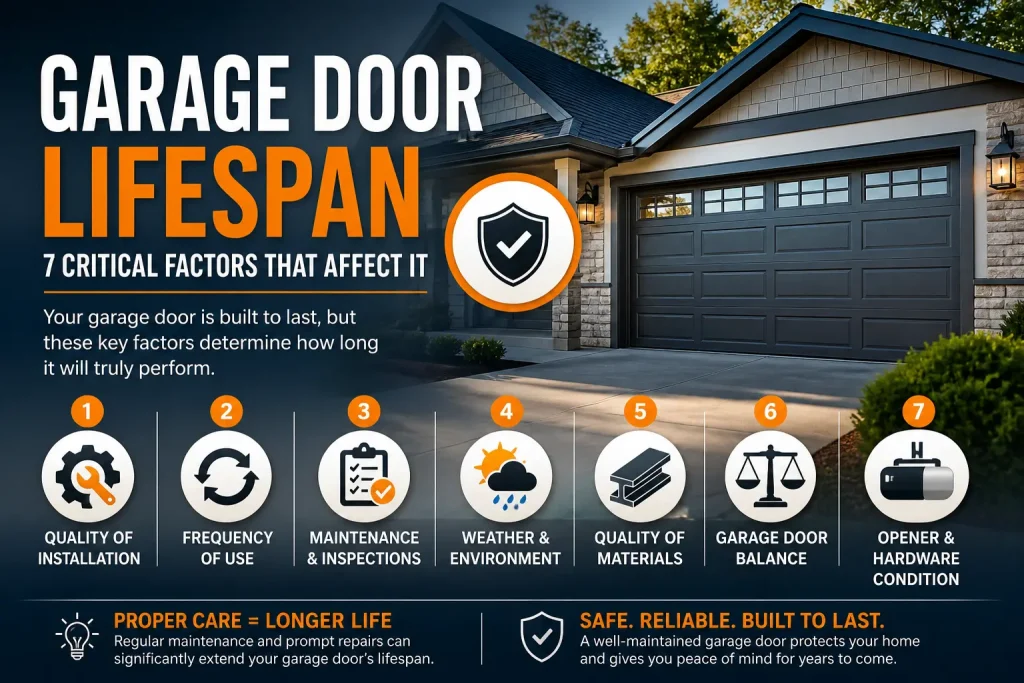
Your garage door is one of the most frequently used systems in your home. Yet many homeowners don’t think about garage door lifespan until problems start appearing. Understanding garage door lifespan helps you plan maintenance, avoid unexpected breakdowns, and protect your investment.
A well-maintained garage door can last for many years, but several important factors influence how long it continues to operate safely and efficiently.
What Is the Average Lifespan?
The average lifespan depends on the type of door, the quality of materials, usage frequency, and maintenance habits. While some garage doors perform reliably for many years, others may experience early wear due to environmental conditions or lack of care.
The key to extending garage door lifespan is understanding what affects it most.
7 Critical Factors That Affect Lifespan
1. Quality of Installation
Proper installation plays a major role in determining garage door lifespan. If a garage door is not aligned correctly, balanced properly, or securely installed, components may wear out faster.
Professional installation ensures that tracks, springs, and hardware work together efficiently from the beginning.
2. Frequency of Use
Garage doors used multiple times per day experience more wear than those used occasionally. Every opening and closing cycle places stress on springs, rollers, cables, and the opener system.
Heavy daily usage can reduce overall garage door lifespan if regular maintenance is not performed.
3. Maintenance and Routine Inspections
Regular garage door maintenance significantly impacts garage door lifespan. Lubricating moving parts, tightening hardware, and checking balance prevent small issues from becoming major problems.
Skipping maintenance is one of the most common reasons garage doors fail earlier than expected.
4. Weather and Environmental Conditions
Extreme temperatures, humidity, and storms can affect garage door lifespan. Metal components may rust, wooden doors can warp, and insulation may deteriorate over time.
Homes in areas with fluctuating climates often require more consistent maintenance to protect their garage doors.
5. Quality of Materials
Garage doors come in various materials such as steel, wood, aluminum, and composite. The durability of these materials directly influences garage door lifespan.
Higher-quality materials generally resist wear, corrosion, and impact better than lower-grade options.
6. Garage Door Balance
An unbalanced garage door puts additional strain on springs and the opener. Over time, this added stress can shorten garage door lifespan significantly.
Checking balance periodically helps reduce pressure on critical components and improves long-term performance.
7. Opener and Hardware Condition
The garage door opener and hardware system must function smoothly to support overall operation. Worn rollers, frayed cables, and strained openers contribute to early wear.
Addressing these issues promptly helps preserve garage door lifespan and prevents sudden breakdowns.
Signs Your Garage Door Is Near the End of Its Lifespan
Recognizing warning signs early can prevent safety risks and expensive emergency repairs. Common indicators include:
- Frequent breakdowns
- Excessive noise during operation
- Visible rust or panel damage
- Door becoming heavy or unbalanced
- Slow or inconsistent movement
If multiple components begin failing at once, it may indicate that your garage door lifespan is reaching its limit.
How to Extend Garage Door Lifespan
Homeowners can take simple steps to maximize garage door lifespan:
- Schedule annual inspections
- Lubricate moving parts regularly
- Tighten loose bolts and hardware
- Test door balance periodically
- Replace worn components early
- Avoid DIY spring adjustments
Consistent maintenance is the most effective way to extend garage door lifespan and maintain safe operation.
Garage Door Repair vs Replacement
When issues become frequent, homeowners often wonder whether to repair or replace their garage door. Minor issues like worn rollers or cables can often be repaired, helping extend garage door lifespan.
However, if structural damage or repeated failures occur, replacement may be the safer long-term option.
Frequently Asked Questions
How long does a garage door typically last?
Garage door lifespan varies depending on maintenance, material quality, and usage frequency.
Does regular maintenance increase garage door lifespan?
Yes. Routine inspections and lubrication significantly extend the life of your garage door system.
Can weather affect garage door lifespan?
Extreme weather conditions can accelerate wear on metal, wood, and hardware components.
Is it better to repair or replace an aging garage door?
If multiple components fail frequently, replacement may provide better long-term reliability.
How do I know if my garage door is worn out?
Frequent repairs, excessive noise, and visible structural damage are common signs.
Final Thoughts
Understanding lifespan allows homeowners to plan ahead, reduce unexpected repairs, and improve overall safety. By focusing on proper installation, routine maintenance, and early problem detection, you can significantly extend the performance of your garage door.
A proactive approach ensures your garage door remains reliable, secure, and efficient for years to come.
For more updates, maintenance tips, and local service information, follow us on Facebook.